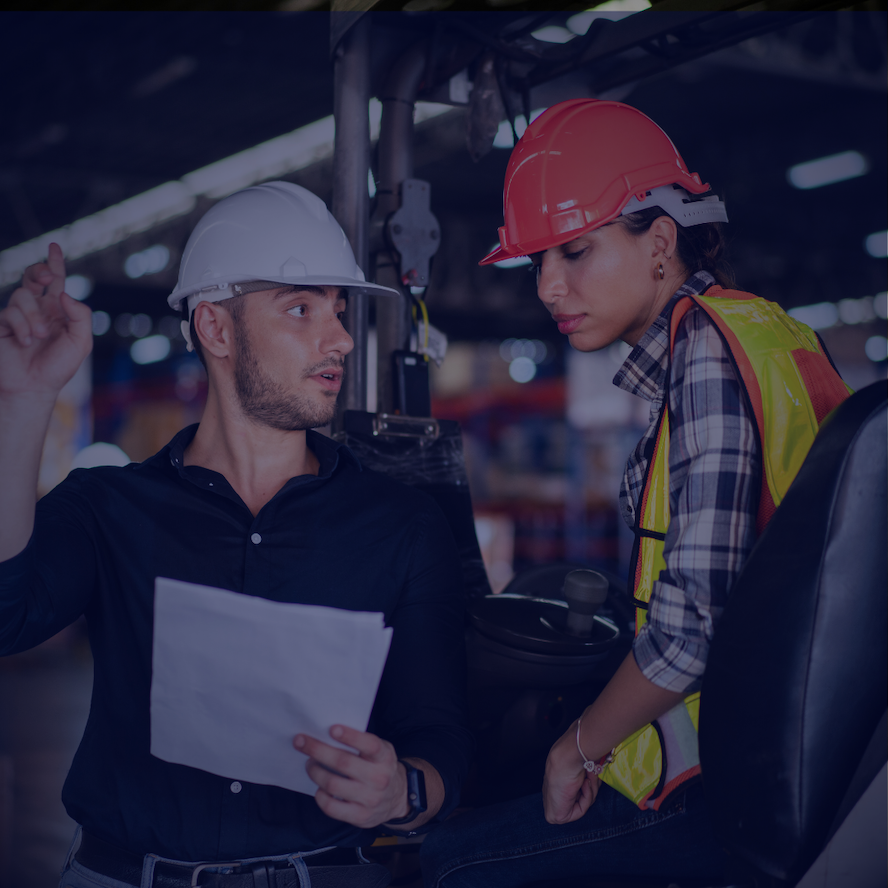
Build internal trainers who teach from hazards, evaluate real performance, and document training that holds up—not presenters who read slides.
Designed for supervisors, leads, and experienced operators expected to train others without relying on PowerPoint or classroom-only instruction.
Most Train-the-Trainer programs focus on presentation skills instead of what trainers actually need to do on the floor or in the field.
Most Train-the-Trainer programs break down for the same reasons:
Trainers are taught how to present slides, not how to train from hazards and real work conditions.
PowerPoint becomes the focus, even though most trainers work on the floor or in the field and rarely use slide decks.
There is no consistent standard for evaluating performance, only attendance or presentation feedback.
Trainers are not taught how to document training defensibly in a way that holds up beyond the classroom.
Hazard recognition, risk, and real-world decision-making are treated as secondary to content delivery.
Trainers are left to manage correction and accountability without guidance, often putting them in the role of disciplinarian instead of instructor.
The result is training that looks complete on paper but doesn’t survive real operations.
Our Train-the-Trainer program is built around how training actually happens on the floor and in the field—not in classrooms or behind slide decks.
We train internal trainers to teach from hazards, evaluate real performance, and document training that holds up beyond the classroom.
Our approach is different by design:
Start with hazards and risk, not slides
Trainers are taught to lead instruction from real hazards, tasks, and operating conditions using risk as the foundation—not PowerPoint as a crutch.
Define the trainer’s role under OSHA
We clarify what trainers are responsible for: teaching, observing, evaluating, and documenting competency—without becoming disciplinarians or supervisors.
Train for adult learners, not classrooms
Instruction is discussion-based, task-focused, and built around how experienced workers actually learn—through interaction, explanation, and demonstration.
Evaluate real performance, not attendance
Trainers learn how to conduct hands-on, performance-based evaluations using consistent standards instead of relying on sign-in sheets or presentation feedback.
Maintain control without slowing the work
Trainers are taught how to keep evaluations focused, manage time, and distinguish operational checks from maintenance activities so training stays efficient and effective.
Document training so it holds up
We teach trainers how to document training and evaluations in a way that is clear, consistent, and defensible beyond the classroom.

By the end of the Train-the-Trainer program, internal trainers leave with more than information—they leave with tools, structure, and confidence they can use immediately in the field.
Train-the-Trainer gives organizations control over what is taught, how it’s taught, and who teaches it. Instead of relying on outside trainers or generic programs, companies build internal trainers who understand their site, their equipment, and their operating realities.
This allows training to be tailored to real hazards, workflows, and expectations—rather than assuming one program fits every operation.
No two workplaces operate the same way. Forklift routes, refueling procedures, traffic patterns, and daily hazards vary by site and by shift. Train-the-Trainer provides a framework trainers can adapt—so instruction reflects how work is actually done, not how a slide deck describes it.
The goal is not “do it our way,” but teach what must be taught and adapt it responsibly to your environment.
Train-the-Trainer helps organizations establish consistent training standards, performance evaluations, and documentation across trainers and shifts. When incidents occur, this consistency demonstrates that hazards were identified, employees were trained appropriately, and expectations were clearly communicated.
It adds a critical layer of protection by showing training was deliberate, structured, and tailored to the operation—not generic or ad hoc.
1. Classroom foundation (short and focused)
We start by aligning trainers on hazards, risk, OSHA expectations, and their role as trainers—without overloading them with slides or theory.
2. Field-based instruction and discussion
Training shifts quickly to the floor or field, where trainers learn how to teach from real tasks, hazards, and workflows specific to your operation.
3. Performance-based evaluation practice
Trainer candidates practice evaluating real work using structured checklists and evaluation standards—learning how to keep control and stay focused.
4. Feedback, calibration, and wrap-up
Trainers receive direct feedback, swap roles, and leave with a clear understanding of how to apply the method consistently after the session.
This approach is a good fit when:
You have experienced operators or supervisors expected to train others
Training is conducted regularly or across multiple shifts
Equipment, workflows, or hazards vary by site or task
You want to reduce reliance on outside trainers
Training needs to hold up after incidents, audits, or near-misses
If training is a one-time requirement, traditional instruction may be sufficient.
If training is ongoing, operational, and high-risk, Train-the-Trainer creates long-term control.
We’ll review your operation, training goals, and timing to determine whether Train-the-Trainer is the right fit—without pressure or obligation.